Artisan craftsmanship since 1979
Since 1979, the Noyez family has been making Noisettines du Médoc in the village of Blaignan, in the Bordeaux wine region of France.
Over 45 years of artisan craftsmanship, a recipe inspired by 1649, products made entirely by hand, and hundreds of thousands of visitors welcomed to our family workshop.
Our shops · Discover us · Our Quality Promise · Our specialities

The 1970s
1979: Noisettines du Médoc is born
Noisettines du Médoc were created in the late 1970s by Edith and Michel Noyez in an old wine cellar in Blaignan, a village among the vineyards of the Bordeaux region.
Edith, a seamstress, and Michel, a cook, had decided to make their family home in this dilapidated building, which was over 200 years old. With limited resources, they set about bringing it back to life.
Michel then decided to reinvent an old recipe dating back to 1649 for Edith. After many experiments with hazelnuts, a fruit he had always loved, he created the Noisettine.
The Noisettine was born: a hazelnut slowly cooked in a homemade syrup, then coated in a delicate, airy caramel for a light, crisp texture.
The 1980s
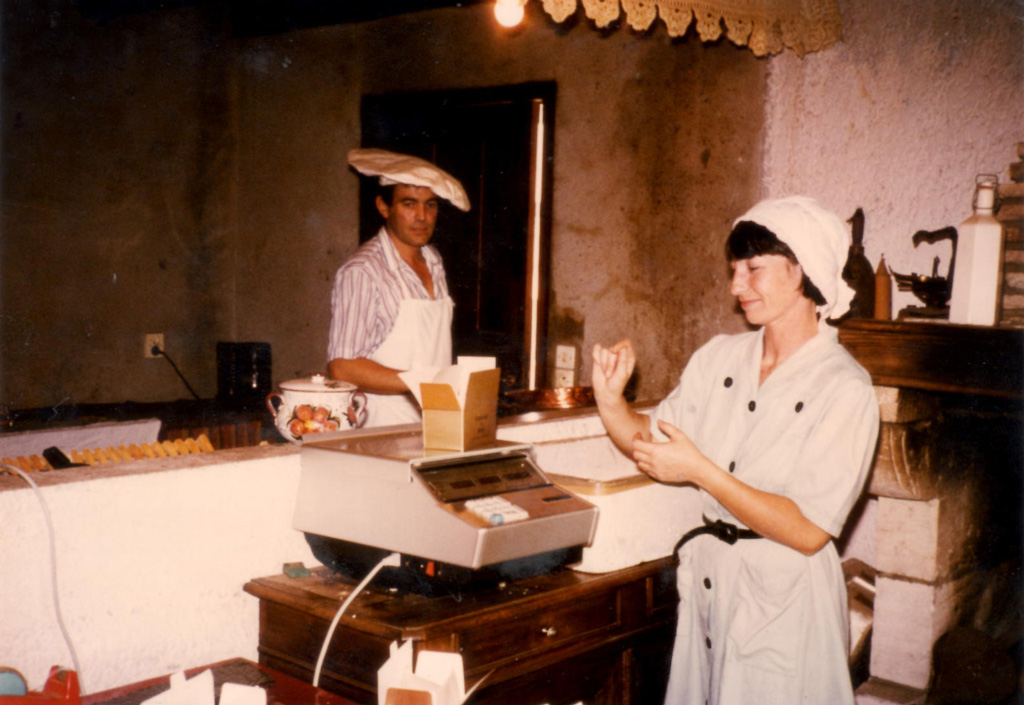
Edith and Michel began working together in their small family business, making Noisettines on the stove in their own kitchen.
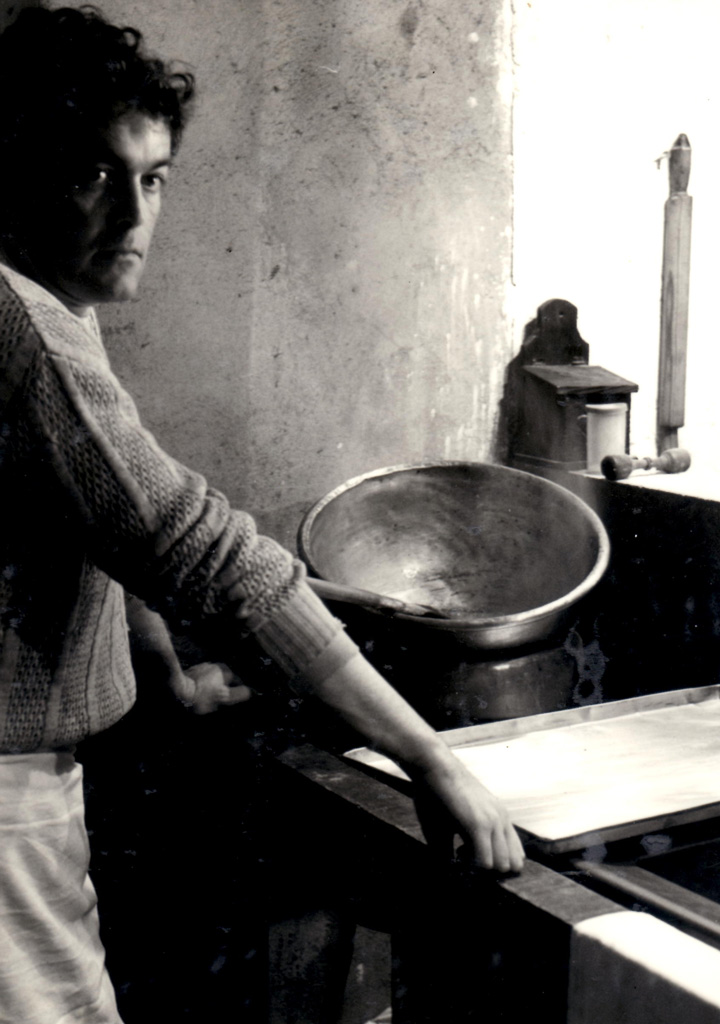
Michel worked through the night, producing around 15 boxes every 40 minutes in small copper pans, so that Edith could take them to local fairs and markets early the next morning.
Word soon spread, and visitors from Blaignan, neighbouring villages and further afield began making their way to the family home.
Michel often spent entire days cooking to keep up with demand.
In 1982, a chance encounter introduced him to lecturers from the mechanical engineering department at the University Institute of Technology in Talence, near Bordeaux. They designed a prototype machine using a bicycle sprocket, a windscreen-wiper motor and a motorcycle chain to rotate a copper pan over a burner.
This enabled Michel to produce consistent 2 kg batches of Noisettines every 25 minutes and welcome a growing number of visitors.
A growing reputation
Edith and Michel welcomed visitors from all over France. In 1985, with support from the Chamber of Trades and Crafts, they built their first professional workshop beside the family home. This gave them better facilities for both production and welcoming guests.
They also hired their first employee!
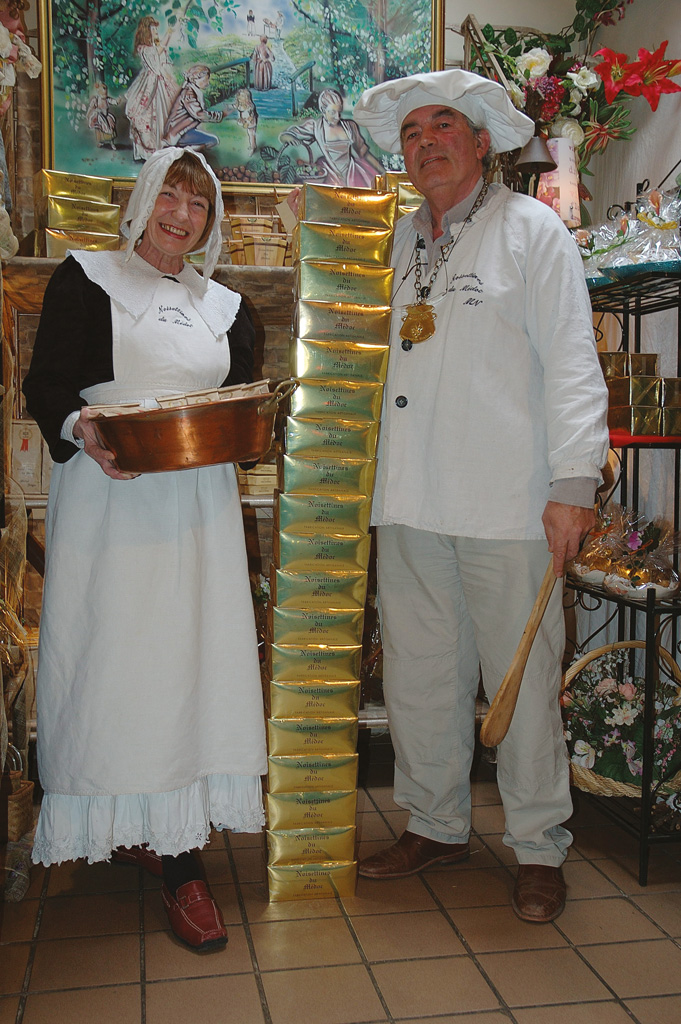
Edith began welcoming visitors in traditional dress, sharing the family's story during their visits. At the time, she was expecting their son Romain, who was born in 1986.
Edith and Michel's hard work earned them the appreciation of customers, many of whom became friends, as well as recognition from food professionals and respected travel guides. Highlights included the Coq d’Or award in 2002 and recommendations from guides such as Le Routard.
They also created two new specialities: crème de Noisettines, their hazelnut spread, in 2001, followed by the Mécoquine in 2004.
The 2010s
2017: Noisettines enters the Petit Larousse French dictionary
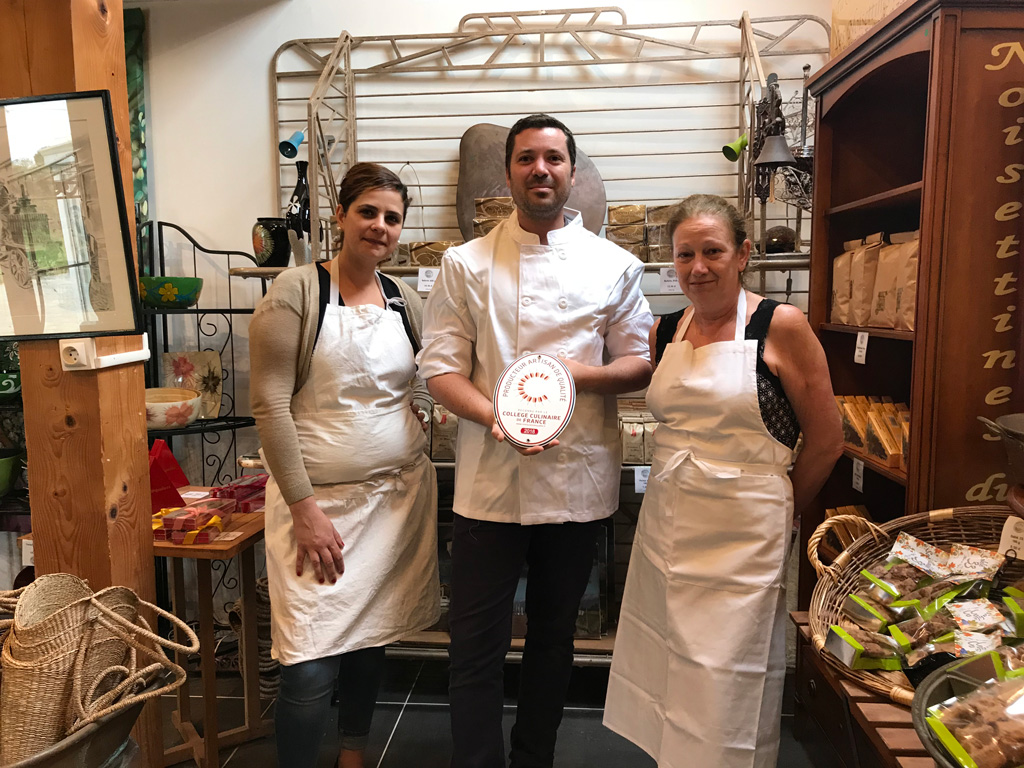
Recognised as an Artisan de Qualité by the Collège Culinaire de France since 2018
True to its roots, the Noyez family has deliberately kept the business small to preserve its artisan craftsmanship in its village of 250 inhabitants.
Our products are made entirely by hand in our family workshop, then sorted, weighed and packed by hand. They are made with natural ingredients, without preservatives or colourings. Since 2006, Noisettines have been made in 1.8 kg batches every 25 minutes, using a new generation of copper pans.
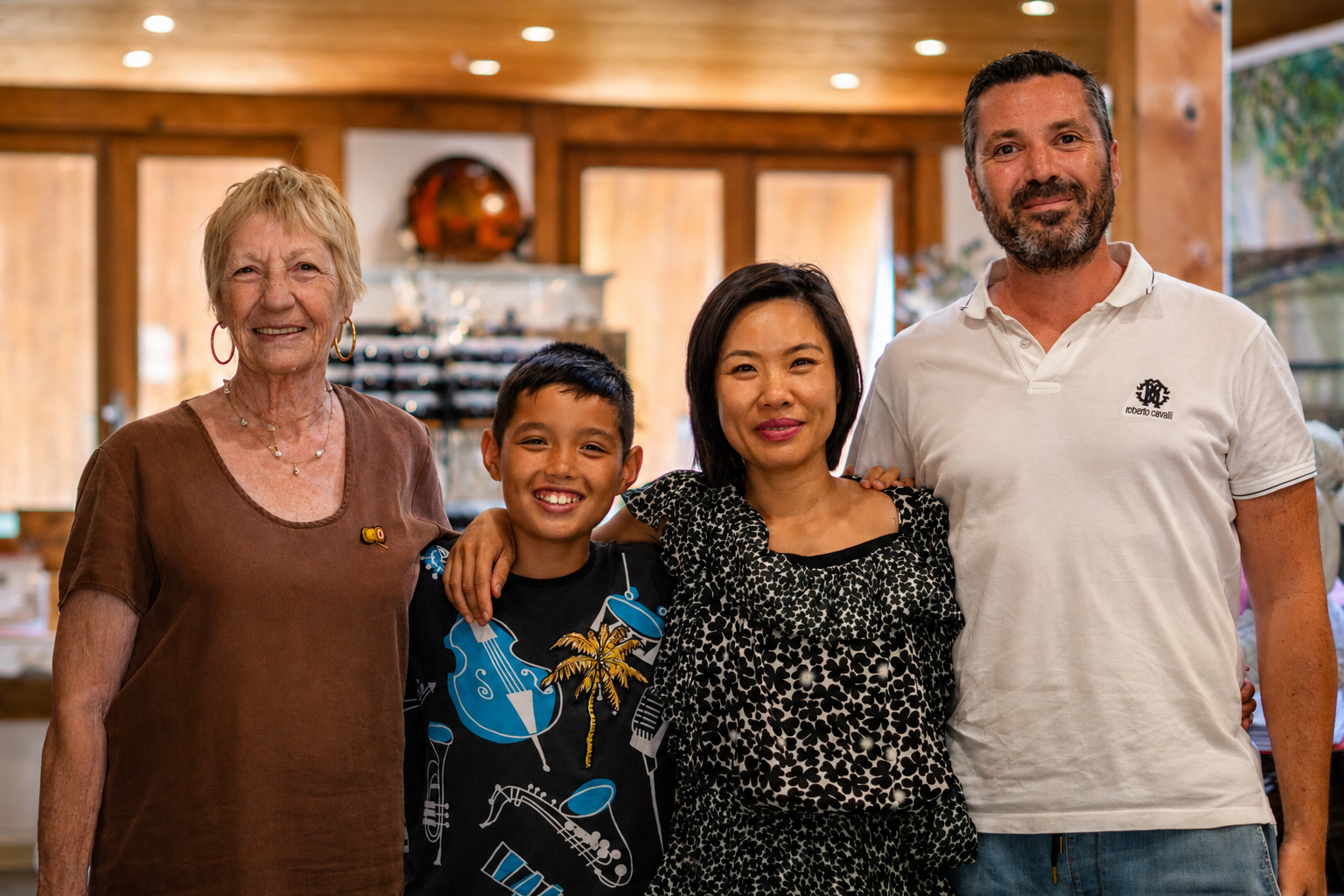
In late 2008, Edith and Michel began passing on their story and skills to their son Romain and his wife Thi Hà. The couple continued the family tradition while creating new specialities, including the Sablé 33 biscuit in 2009, and opening the first Noisettines shop in Bordeaux in 2011.
Today, the business has a team of five, including Romain and Thi Hà.

Since 2020
The story continues in Blaignan, in the family workshop where Noisettines du Médoc are still made by hand with the same dedication to artisan craftsmanship.
Alongside Romain and Thi Hà, the next generation is growing up as part of the family business. Despite his young age, Raphaël already enjoys joining in, watching and helping his parents in his own way.
The future is still to be written, but what matters most remains unchanged: preserving our craftsmanship, our family spirit and the pleasure of making things well.